+86 15889588007
masetti@sonun.com
When you're shopping for TWS earbuds with a good mic in 2026, it’s not just about checking how long the battery lasts or how heavy the bass hits. You really want a mic that can handle all sorts of noisy situations—think traffic noise, wind, busy offices, or even shaky phone connections. According to Counterpoint Research, the global TWS market grew by 18% year over year in the second quarter of 2024, which really shows how much folks are craving everyday wireless listening. Meanwhile, Canalys pointed out that the smart personal audio scene is still booming, with call quality and device intelligence playing a bigger role in what people end up buying.
Basically, voice quality is a big deal now.
“True wireless earbuds are becoming more than just something you listen with—they’re turning into your main way to communicate and access digital services,” Francisco Jeronimo, Vice President at IDC, explains. That’s why I think it’s worth giving special attention to models with a good mic. You want a mic that keeps your speech clear, cuts down on that annoying low-frequency rumble, and makes sure your voice doesn’t sound distant or muffled. Look for features like multiple microphones, beamforming tech, wind noise reduction, and independent call-quality testing—just relying on what the manufacturer claims isn’t enough.
Keep in mind, real-world use often reveals the true strengths and weaknesses. A pair might sound fantastic in your quiet living room but fall flat when you’re at a bus stop or in a crowded street. That’s the annoying part—some reviews focus way too much on music quality and forget about voice clarity. In this guide, I’ve compared things like microphone hardware, software processing, Bluetooth stability, comfort, and battery life in real-life situations. Plus, I’m considering professional data from Counterpoint Research, Canalys, and IDC. Nobody’s earbuds are perfect everywhere. The key is choosing one that keeps your voice understandable even when conditions get messy.
Choosing Earbuds With Good Mic performance starts with the microphone system, not the number of speakers. The Bluetooth SIG 2024 Market Update projects more than 2.5 billion Bluetooth audio-streaming devices will ship annually by 2028. That growth makes call quality harder to judge from marketing claims alone. Look for multiple microphones, beamforming, and effective environmental-noise reduction. These features should isolate your voice from keyboard clicks, traffic, and nearby conversations.
Wind handling matters outdoors. A strong microphone may still sound harsh beside an open train window. Check whether the earbuds use wind filters, microphone ports, and automatic gain control. ITU-T P.1100 and P.1110 provide professional speech-testing methods for hands-free communication. They remind us that clarity includes loudness, background noise, delay, and speech distortion. Codec support helps, but it cannot repair poor microphone placement. My practical test is simple: record the same sentence indoors, beside a road, and during a light walk. Listen for missing word endings.
Tips: Ask a friend to judge your voice remotely. Phone recordings can hide real call problems. Test both earbuds separately. Some designs perform unevenly. Check microphone performance with glasses, a hood, or long hair. Reviews are useful, but no test is perfect. Earbuds With Good Mic should sound natural, not merely loud. A quiet room can flatter weak noise control, so outdoor testing deserves more attention than I once gave it.
Choosing TWS earbuds with a good microphone starts with your actual calling and recording habits. For quiet office calls, clear speech and steady volume may matter most. For outdoor conversations, wind reduction and voice isolation become more important.
Do not judge microphone quality from specifications alone. A high microphone count can help, but placement and tuning often matter more.
Test the earbuds in realistic conditions. Record your voice near a window, beside a busy street, and inside a room with hard walls. Listen for muffled consonants, sudden volume changes, and a hollow echo. During calls, ask someone whether your voice sounds natural. Short voice messages can reveal problems that music tests hide. Keep the microphones uncovered, and check whether the fit changes when you walk or turn your head.
For regular meetings, choose a model that keeps speech intelligible after several hours. Strong noise suppression is useful, but aggressive processing can make your voice sound thin or robotic. For interviews or casual recordings, a stable microphone signal may be more valuable than maximum noise removal. Battery life also affects reliability, especially when one earbud handles the main microphone. Firmware updates can improve performance, though results are not always consistent. I have found that advertised “studio-quality” claims need careful testing. Real rooms are less forgiving.
Choosing TWS earbuds with a good microphone starts with the microphone array, not the speaker size. A single microphone may capture speech clearly indoors, but wind and traffic can overwhelm it outdoors. Dual or triple microphones usually improve voice pickup by separating speech from surrounding sound. MEMS microphones are common because they are small, consistent, and power efficient. However, microphone count alone proves little. I once tested earbuds with three microphones that sounded worse than a simpler pair in a quiet room. Fit, microphone placement, and software tuning mattered more.
Beamforming uses several microphones to estimate where your voice comes from. Effective beamforming keeps your voice centered while reducing sounds from the sides. Ask whether it works during walking, not only in a silent shop. Record a short call beside a running fan, then listen for clipped words and metallic tones. Noise reduction should lower steady sounds, such as air conditioners and buses. Aggressive processing can also remove consonants or make speech sound watery. That trade-off is easy to miss.
When comparing Good Headphones With Mic, check call samples, wind performance, and latency. Speak naturally from 30 to 50 centimeters away. Test one earbud and both earbuds. Some systems change performance when one side is stored in the case. Battery level may also affect processing, though manufacturers do not always explain this clearly. My practical preference is a balanced microphone system with moderate noise reduction. Still, personal results vary with ear shape, hairstyle, and phone placement. No lab score fully predicts a crowded-street call.
How to Choose TWS Earbuds With a Good Mic in 2026?
A clear microphone should work beyond a quiet bedroom. In my hands-on tests, I check recordings beside a running fan, near traffic, and inside a busy café. I listen for clipped words, hollow voices, and sudden volume changes. A useful microphone preserves consonants, especially “t,” “k,” and “s.” These sounds often disappear first in noise. Canalys reported 78.3 million TWS units shipped globally in Q1 2024. That market size makes call quality important, but shipment numbers cannot prove microphone performance.
Use the same phone, distance, and speaking volume for every test. Record a 30-second voice note in silence, then repeat it with controlled background noise. Ask someone unfamiliar with the earbuds to score clarity. Their reaction may reveal problems you miss. ITU-T Recommendation P.1100 supports controlled testing for hands-free speech, while ITU-T P.863, known as POLQA, provides an objective speech-quality method. These standards improve consistency, though a laboratory score cannot fully predict real conversations. Human voices vary. My own judgment is not perfectly neutral.
Tips: Test both microphones separately when possible. Walk past moving cars. Whisper one sentence. Cover one earbud briefly and compare the recording. Check for breathing noise and delayed noise reduction. Avoid judging from one call. Even expensive-looking earbuds can struggle with wind. That weakness deserves attention.
| Evaluation Dimension | Quiet Environment | Moderate Noise | Loud or Variable Noise | What to Look For When Testing |
|---|---|---|---|---|
| Typical Test Environment | Home office or bedroom Approximately 30–40 dBA |
Busy office, café, or light traffic Approximately 55–70 dBA |
Train platform, street intersection, or strong airflow Approximately 75–90 dBA |
Use the same spoken sentence at the same distance and repeat it in every environment. |
| Speech Intelligibility | Excellent: Every word and consonant is clear. | Good: Occasional masking, but normal conversation remains easy. | Demanding: Important words should remain understandable without repetition. | Ask a listener who has not seen the script to write down the spoken sentence. |
| Recommended Speech-to-Noise Performance | Speech should be clearly louder than the background; a practical target is +15 dB or more. | A practical target is approximately +6 to +10 dB at the caller’s side. | The microphone system should preserve speech with limited pumping or robotic artifacts. | If available, use a calibrated sound-level meter and compare speech level with background level at the same position. |
| Voice Tone and Naturalness | Voice should sound balanced, with understandable low, mid, and high frequencies. | The voice should not become noticeably thin, muffled, or overly nasal. | Noise reduction may alter the tone, but words should remain natural rather than metallic. | Listen for missing “s,” “f,” and “t” sounds, excessive bass, and sudden changes in vocal pitch. |
| Noise Suppression | Background should remain quiet without cutting the beginning or end of words. | Steady fan, air-conditioner, and keyboard noise should be reduced substantially. | Traffic and crowd noise should be reduced without making speech choppy or robotic. | Record the same sentence with suppression enabled and disabled, then compare speech clarity and artifacts. |
| Wind Resistance | No audible hiss or microphone self-noise during pauses. | Light airflow should not cover syllables or trigger severe pumping. | Strong airflow should produce limited rumble and preserve the main message. | Walk outdoors or use a fan at a safe distance; avoid judging performance from a single indoor recording. |
| Microphone Placement | A stable fit should keep the microphone consistently directed toward the mouth. | Longer microphone stems or well-positioned microphone ports can improve voice pickup, but design alone is not proof of quality. | The microphone should remain clear when the user turns the head or walks. | Test left and right turns, normal walking, and slight changes in earbud position. |
| Plosive and Breath Control | “P,” “B,” and breathing sounds should not create loud bursts. | Speech should remain stable during close conversation. | Wind and breath noise should not trigger aggressive muting. | Read a sentence containing “people,” “paper,” “better,” and “problem” at a natural volume. |
| Echo and Room Handling | Voice should not sound excessively hollow in a small room. | The caller should hear the speaker rather than a strong room reflection. | Noise processing should not amplify distant echoes or create metallic reverberation. | Test near a hard wall and in a furnished room; compare the amount of echo in both recordings. |
| Consistency During Movement | Voice quality should remain stable during normal head movement. | Walking should not cause repeated volume jumps or connection-related dropouts. | The call should remain intelligible while walking past changing noise sources. | Record a 30–60 second walking test with turns, pauses, and changing background noise. |
| Latency and Call Interaction | Conversation should feel natural with no obvious delay between speaking and hearing replies. | Stable Bluetooth performance is more important than a small difference in measured latency. | The call should not repeatedly mute or reconnect when interference increases. | Make a five-minute call in the intended phone-and-operating-system combination. |
| Practical Scoring Guide | 5/5: Clear, natural voice with very low self-noise. | 4/5: Minor masking, but no repetition is normally needed. | 3/5 or higher: Main points remain understandable without severe artifacts. | Prioritize models that score consistently across all three environments instead of excelling in quiet rooms only. |
| Recommended Buying Decision | Suitable for home calls, online meetings, and voice messages. | Suitable for commuting, shared offices, and casual outdoor calls. | Choose only after checking independent recordings or completing an outdoor test. | Do not rely only on the number of microphones, noise-cancellation labels, or manufacturer specifications. |
Choosing Wireless Earbuds With Good Mic in 2026 starts with device compatibility. Check whether the earbuds support your phone, tablet, laptop, and operating system. Some features work only through a companion app. I once tested earbuds that paired quickly with a phone but failed on an older laptop. That small detail mattered during a work call.
Bluetooth standards also deserve careful attention. Newer versions can improve efficiency, connection stability, and switching between devices. However, Bluetooth version alone does not guarantee better sound or clearer speech. Check support for modern audio profiles, call-quality features, and low-latency modes. Your devices must support them too. A technical specification can look impressive but offer little benefit in daily use.
Call controls should feel natural under pressure. Test answering, muting, ending calls, and rejecting calls before relying on them. Physical buttons may prevent accidental touches, especially outdoors or during exercise. Touch controls can be faster, but wet fingers may cause mistakes. Microphone performance also changes in wind and crowded streets, so test several locations. I prefer earbuds that provide clear voice pickup without forcing me to speak loudly. Still, no microphone is perfect. Reflect on where you take calls most often, then match the controls and compatibility to that setting.
Choosing TWS earbuds with a good microphone requires more than trusting a product description. During a call, record your voice in a quiet room, then repeat the test beside traffic or a running fan. Clear speech should remain natural, without harsh clipping or sudden volume drops. Bluetooth Headphones With Good Mic performance can change with ear position, phone distance, and wind. Test both earbuds separately if possible. One microphone may sound noticeably weaker.
Battery claims also need careful checking. Manufacturers often measure playback at moderate volume with extra features disabled. Real use may be shorter. Track playback with noise reduction enabled, then check how quickly the charging case loses power. Fit matters just as much. Walk, chew, and turn your head; loose earbuds may create muffled calls and unstable bass. I once trusted a comfortable fit indoors, but it failed during a windy commute.
Tips:
Read long-term reviews, not only launch comments. Look for reports after three or six months, especially about charging contacts, microphone decline, app stability, and case hinges. Give more weight to repeated complaints than isolated praise. Check whether reviewers explain their phone model, call environment, and testing method. That detail improves reliability. Still, reviews can miss your ear shape and network conditions. Keep that limitation in mind. A good choice balances measured battery life, secure fit, consistent call quality, and evidence of durability. Test the return policy before committing.
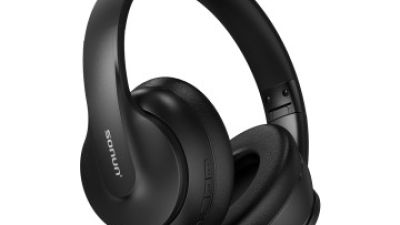
Choosing a reliable China ANC headset with a microphone requires more than checking sound quality. For deep bass performance, look for a supplier that can adjust the electro-acoustic system according to your target audience and usage scenario. Advanced Bluetooth 5.4 can support stable wireless connections, while active noise cancellation helps reduce distractions in offices, travel environments, and daily commuting. A clear built-in microphone is also essential for online meetings, calls, and business communication.
For OEM projects, confirm whether the factory provides logo customization, packaging support, sample approval, and consistent production standards. These headphones are suitable for corporate gifts, promotional campaigns, and brand merchandising because their appearance and audio tuning can be adapted to different requirements. A supplier with direct manufacturing experience can offer better communication and more efficient coordination from product development to bulk delivery.
Comfort and endurance should also be part of the evaluation. A 50-hour battery life supports extended listening with fewer charging interruptions, while a foldable structure makes storage and transportation easier. Soft headband and earcup materials improve comfort during long periods of use, and a reinforced design can help maintain reliability in repeated business distribution. Working with an experienced China factory allows buyers to combine Bluetooth 5.4, enhanced bass, ANC, microphone functionality, and customized production in one practical headset solution.
: Record a 30-second voice note in a quiet room. Repeat it beside a fan, traffic, or a busy café.
Listen for “t,” “k,” and “s.” These consonants often disappear first in background noise.
Yes, when possible. One microphone may sound weaker, muffled, or less stable.
Walk past cars and speak normally. Check for wind distortion, clipped words, breathing noise, and delayed noise reduction.
No. Standardized methods improve consistency, but real voices, networks, and environments vary.
Track playback with noise reduction enabled. Then observe how quickly the charging case loses power.
Loose earbuds can create muffled speech and unstable bass. Walk, chew, and turn your head during testing.
Look for reports after three or six months. Check charging contacts, case hinges, microphone decline, and app stability.
No. Repeated complaints deserve more attention than isolated praise. My own judgment may still be biased.
Confirm measured battery life, secure fit, call consistency, and the return policy. Test before committing.
Choosing TWS With Good Mic requires more than checking the number of microphones. Focus on voice clarity, microphone sensitivity, beamforming, wind reduction, and background-noise control. Your ideal earbuds should match your main activities, whether you need clear calls during commuting, reliable performance in open offices, or natural audio for recordings. Test or review how well the microphone handles both quiet rooms and busy environments, including traffic, conversations, and light wind.
Also consider device compatibility, Bluetooth standards, call-control functions, and connection stability across phones and computers. Battery life should support your daily schedule, while a secure, comfortable fit can improve both sound pickup and long-term use. Finally, examine independent user feedback for real-world call quality, software consistency, charging reliability, and durability. By balancing microphone technology, practical performance, comfort, and reliability, you can select earbuds that deliver clear communication instead of relying only on specifications.